
By Anita Brown and Broderick Smith
Introduction
In today’s data-driven world, data governance is a critical aspect of business operations, and privacy compliance is a legal necessity. Yet, many directors and boards overlook these elements, not realising they are central to their governance responsibilities. This oversight can lead to significant risks, including regulatory fines, reputational damage, and the loss of client or shareholder trust.
In 2023, for instance, Meta faced a record US$1.3 billion fine for violating GDPR privacy laws by mishandling European user data, showing just how costly it can be when data governance and privacy are mismanaged.
This blog aims to clarify why data governance and privacy are essential to a corporate governance framework and how directors can proactively integrate these elements into their oversight role.
The Role of Data Governance in Corporate Oversight
Defining Data Governance
Data governance is the practice of managing and safeguarding an organisation’s data as a strategic asset. It establishes the rules, processes, and structures that ensure data is available, secure, and reliable throughout its lifecycle. Similar to traffic rules that govern movement on a highway, data governance provides guidelines to prevent issues and ensure smooth data flow.
Data governance includes policies like the General Data Protection Regulation (GDPR) and standards dictating how data is accessed, protected, and utilised. Data protection rules ensure sensitive information is handled securely, while governance rules define how data is classified and used within the organisation. Metadata, or “data about data”, helps explain what a dataset contains, guiding its movement within the business.
By governing data flow both internally and externally, organisations can ensure corporate-sensitive, confidential, and personally identifiable information (PII) is tracked and protected.

Why It Matters
Data governance secures an organisation’s data, ensures consistency, and keeps it compliant with regulations, mitigating risks like poor data quality, breaches, and penalties. Well-governed data supports strategic decision-making, maintains regulatory compliance and provides leadership with reliable, actionable insights.
Directors’ Responsibilities and Accountability
Directors play a crucial role in ensuring robust data governance frameworks are in place, linking their oversight to risk management and strategic decision-making. Directors are responsible for overseeing policies that safeguard data integrity, security, and compliance.
By collaborating with data stewards (those managing data), users, and the IT department, directors must ensure the organisation has the necessary processes, tools, and policies to manage data securely. Without clear leadership from the board, the organisation faces increased risks of data mismanagement, operational disruptions, and regulatory breaches.

Importance of Emerging Technologies
Directors must also recognise the rising influence of emerging technologies like AI, IoT, and blockchain. These innovations generate large amounts of data, often including PII. AI algorithms, for example, process sensitive information, which raises new privacy concerns. Directors need to ensure that policies not only cover traditional data protection but also consider the ethical and compliant use of AI-driven insights.
Understanding PII (Personally Identifiable Information) and Privacy
What is PII?
PII includes any data that directly or indirectly identifies an individual. It can range from names and addresses to email addresses or biometric data. Under the Australian Privacy Act 1988, personal information is defined broadly, covering both factual details and opinions about an individual, whether or not the information is true or recorded. Handling this data responsibly is critical to maintaining privacy compliance.
Privacy Regulations and Risks
Privacy regulations such as GDPR in the EU and the Australian Privacy Principles (APPs) under the Privacy Act establish strict guidelines for managing PII. Organisations are under increasing pressure as these regulations evolve, with global businesses facing the added complexity of adhering to laws across multiple jurisdictions. For example, GDPR mandates strict consent and data handling rules, while the Privacy Act focuses on transparency and security. Non-compliance can lead to significant penalties, from financial consequences to the erosion of customer trust.
In addition, data localisation laws in various countries require that data be stored and processed within national borders, adding operational challenges for multinational organisations. Directors must ensure their data governance frameworks are adaptable to such diverse and evolving legal landscapes. To mitigate these risks, organisations should consider aligning their privacy practices with security frameworks like ISO27001 (Information Security Management System) and National Institute of Standards and Technology Cybersecurity Framework (NIST), and adhere to state-level surveillance laws, AI standards such as AS42001, and contractual agreements with partners on data security.
Directors’ Oversight Role
Directors must ensure that their organisation’s policies for handling PII are robust and compliant with the latest regulatory requirements. Oversight of data protection frameworks should be aligned with broader risk management and compliance strategies. Directors should regularly review these policies and adjust them in line with evolving privacy laws and cybersecurity threats.
The Traditional Focus
Directors have traditionally focused on financial performance, operational efficiency, and strategic planning—areas perceived as the core drivers of business success. As a result, data governance and privacy concerns often take a back seat. However, in today’s digital world, effective data management is as critical as financial oversight. Neglecting these responsibilities can expose an organisation to significant legal, financial, and reputational damage, as highlighted by the high-profile breach by Facebook (Meta) and other large-scale incidents in Australia and globally.
Complexity and Lack of Awareness
The complexity of data governance and privacy can be overwhelming for directors, particularly in organisations with immature data governance practices. The intricacies of regulations and the rapidly evolving landscape of data protection can further complicate directors’ ability to engage meaningfully with these issues. This complexity, coupled with a lack of awareness regarding the importance of data governance, often results in a disconnect between directors and their oversight roles.
Bridging the Gap: Integrating Data Governance into Corporate Governance
To effectively bridge the gap, directors must recognise that data governance and privacy are integral to risk management and overall governance responsibilities. They need to understand the following key aspects:
Integral Role of Data Governance
- Data governance and privacy are essential components of risk management and governance responsibilities, not just IT concerns.
- It underpins service delivery, product development, and business intelligence.
Strategic Asset of Data
- With the rise of AI, data has become an incredibly powerful asset.
- Mishandling data can lead to severe consequences.
Comprehensive Policies
- Data governance policies should be treated as strategic assets, aligned with the organisation’s long-term objectives.
- In Australia, compliance with regulations like the APPs is essential to safeguard against breaches.
Defined Accountability
- Establishing clear roles and responsibilities through board-approved policies is crucial.
- Formal structures, such as data governance committees, should be implemented to monitor compliance and enforce policies.
Board Engagement in Cybersecurity
- Directors should engage in regular cybersecurity audits and reviews to ensure the organisation’s defences are up-to-date.
- Annual cybersecurity audits and engagement with cybersecurity experts are vital to monitor and improve risk management.
Robust Cybersecurity Strategy
- A comprehensive cybersecurity strategy must be developed, incorporating regular risk assessments and transparent reporting mechanisms for cyber risks.
Continuous Education Commitment
- Ongoing training and awareness programs are vital for directors and senior management to understand their responsibilities in data governance and cybersecurity.
- Engaging with experts and staying updated with legislative changes foster a culture of data responsibility and cyber resilience across the organisation.
By addressing these elements, directors can better integrate data governance into corporate governance frameworks, enhancing their understanding, fostering a culture of accountability, and strengthening the organisation’s overall resilience against data-related risks.
Practical Steps for Directors to Take Immediate Action
- Evaluate Data Governance Policies: Directors should assess whether there are clear and effective policies to manage data and protect PII and evaluate how these policies align with existing risk management frameworks.
- Engage with Experts: Directors should work with data governance officers or external consultants to get insights into their organisation’s data governance landscape. This engagement helps identify areas for improvement and reinforces the importance of robust practices.
- Implement Monitoring and Review Systems: Conduct regular audits and risk assessments to ensure ongoing compliance and effective data governance. This framework should facilitate periodic reviews to identify vulnerabilities and enhance accountability. Directors should track key performance indicators (KPIs) such as breach frequency, response times, and employee training completion rates to evaluate the effectiveness of their data governance frameworks.
- Promote a Culture of Data Responsibility: Directors should lead efforts to cultivate a culture that prioritises data governance and cybersecurity within the organisation. This can be achieved through training programs, awareness initiatives, and encouraging open discussions about data-related responsibilities.
By taking these actionable steps, directors can fulfil their oversight responsibilities and effectively mitigate risks associated with data governance and privacy.
Conclusion
As stewards of an organisation’s success, directors play a pivotal role in ensuring that data governance and privacy are integrated into their oversight responsibilities. By doing so, they can strengthen the organisation’s resilience, ensure compliance with regulations, and build greater trust with stakeholders. Now is the time for directors to prioritise data governance to safeguard their organisation in an evolving digital landscape.
Why Data Governance Isn’t Just for Big Companies
Many business owners and founders might think data governance only matters for large corporations with formal boards, but this couldn’t be further from the truth. Regardless of the size of your company, handling data securely and responsibly is essential. Every business collects and processes data, whether it’s customer contact details, financial information, or employee records. Without proper governance, your business could be exposed to risks like data breaches, non-compliance with privacy regulations, or even reputational damage.
Small businesses often believe they’re too small to be targeted by hackers or fined for non-compliance, but in reality, they are often more vulnerable. They might not have the same resources as larger corporations to recover from the financial and operational impacts of a data breach. By implementing strong data governance practices early, founders and business owners can protect their company from these risks and build a foundation for sustainable growth.
Subscribe now to our LinkedIn newsletter to read more: https://bit.ly/Subscribe-to-LinkedIn
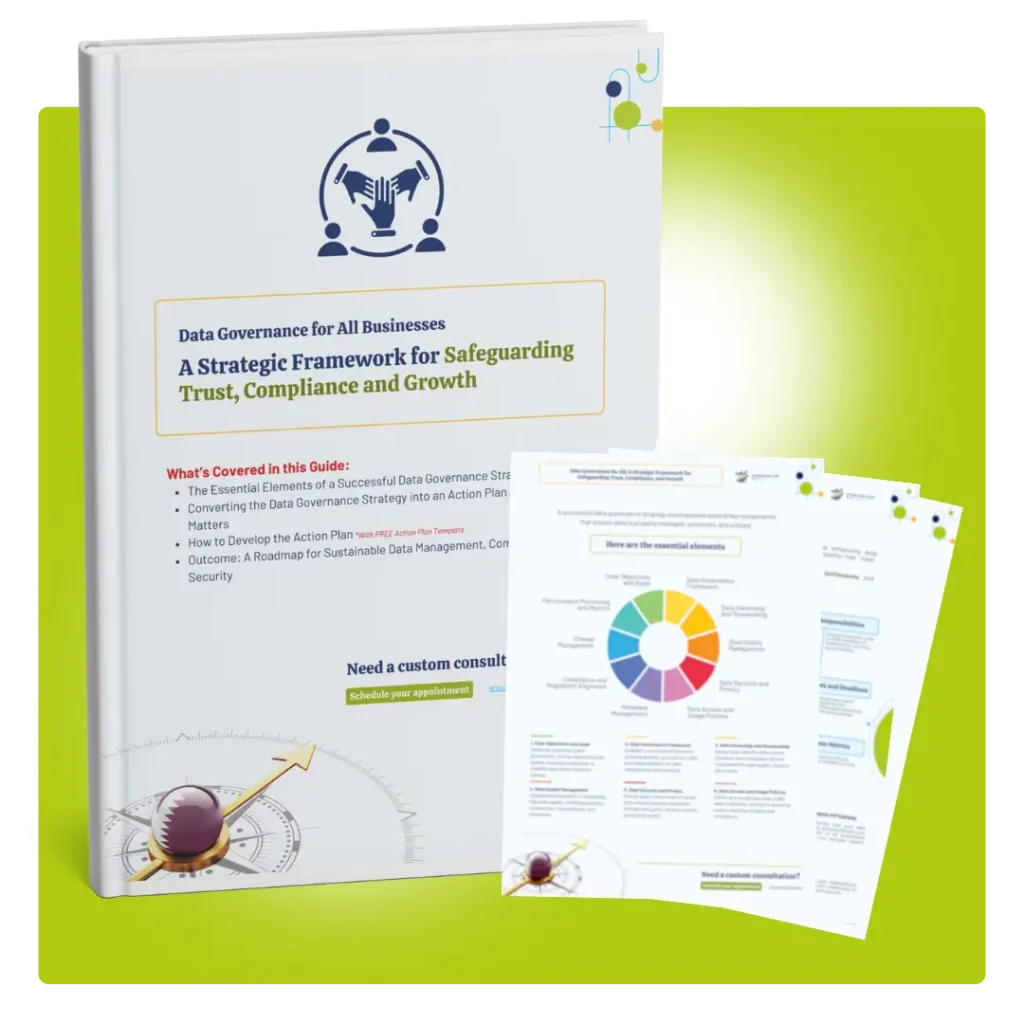
Ready to Elevate Your Data Governance Strategy? Download our free resource, Data Governance for All Businesses: A Strategic Framework for Safeguarding Trust, Compliance, and Growth.
This comprehensive framework will help you implement a tailored approach that not only ensures compliance and mitigates risks but also drives sustainable growth. Equip your organisation with the tools to build a resilient governance structure that adapts to evolving challenges and fosters trust with stakeholders.
How We Can Help as Your Governance Partners
At Thrive Partners, we understand the unique challenges businesses face when it comes to data governance. Whether you’re a growing startup, a mid-sized enterprise, or a large organisation, we can help you develop a data governance strategy that aligns with your company’s needs and resources.
Partnering with our data governance and information security experts, we offer a comprehensive service to ensure that your data governance framework is not only robust but also fully integrated into your business operations. From assessing your current data management practices to designing a strategy tailored to your specific industry and size, we’ll work with you every step of the way to ensure compliance and protect your sensitive information.
Our services include:
- Data governance assessments
- Privacy and compliance audits
- Development of tailored governance frameworks
- Ongoing monitoring and support
- Training and resources for your team
With our combined governance and technology expertise, we ensure that your data is not only safe but also used effectively to support your business’s growth and success. Let us help you take control of your data and secure your future.
Get in touch today to discuss how we can help you protect your business with a solid data governance strategy!
Ready to elevate your data governance strategy? Download our free resource, Data Governance for All Businesses: A Strategic Framework for Safeguarding Trust, Compliance, and Growth. This comprehensive framework will help you implement a tailored approach that not only ensures compliance and mitigates risks but also drives sustainable growth. Equip your organisation with the tools to build a resilient governance structure that adapts to evolving challenges and fosters trust with stakeholders.