
When was the last time your board truly added value to your organisation?
If you hesitated before answering, you’re not alone. This is a question that many leaders avoid asking, either because they already know the uncomfortable answer or because they’re not sure where to start addressing the problem. But it’s a question that needs asking.
Let’s stop pretending otherwise: boards are often more of a resource drain than a value driver. And the cost of ignoring this reality is staggering—not just financially, but strategically.
The Cost of Complacency
Here’s a truth that might make you squirm: an ineffective board is worse than no board at all. That’s right. A poorly functioning board can do more harm than good, not just by failing to add value but by actively obstructing progress.
The signs are often subtle but unmistakable:
- Meetings that seem productive but rarely lead to tangible outcomes.
- Agendas bogged down in compliance minutiae instead of big-picture strategy.
- Directors who sit back passively instead of challenging the status quo.
What’s the price of this complacency? Leadership teams that waste hours revising reports to please the board. Opportunities that slip through the cracks because decision-making takes too long. Resources drained by redundant discussions that go nowhere.
But here’s the kicker: none of this is inevitable. These aren’t flaws baked into governance itself—they’re symptoms of a board culture that’s stuck in neutral.
Why High-Performing Boards Break the Rules
Contrary to popular belief, the most effective boards don’t follow a rigid playbook. They aren’t afraid to shake up traditional governance norms in pursuit of better results. In fact, the most transformative boards often break the rules entirely.
Take debate, for instance. How often do you see board members genuinely challenging each other’s ideas? If your board meetings are harmonious to the point of being dull, that’s not a sign of alignment—it’s a sign of stagnation. Healthy disagreement drives innovation. Groupthink kills it.
Another hallmark of high-performing boards? An obsession with metrics. They don’t just review data—they demand it. Gut feelings and vague anecdotes have no place in their decision-making process. Instead, they rely on dashboards that track progress toward strategic goals, and they act swiftly when the numbers reveal red flags.
Finally, accountability is non-negotiable. On the best boards, every director knows their role inside and out—and they deliver. The days of viewing governance as a passive, honorary title are long gone.
This isn’t governance by committee. This is governance with grit.

What’s Holding Your Board Back?
If you’re reading this and feeling uncomfortable, that’s a good thing. Discomfort means awareness, and awareness is the first step toward change.
Let’s unpack some of the common excuses for board underperformance:
“We don’t have the time.” Translation: We haven’t made it a priority. Effective boards make time because they understand the stakes.
“We lack the resources.” Governance doesn’t have to be a drain if it’s done strategically. Investing in the right tools and training can save time and money in the long run.
“This is how we’ve always done it.” The most dangerous phrase in governance. The world is evolving, and so should your board.
At the root of all these excuses is a fear of disruption. But here’s the thing: disruption is exactly what most boards need.
The Self-Disruption Framework: How to Transform Your Board
If your board isn’t delivering the results your organisation needs, you don’t need incremental improvement—you need a complete reset. Here’s a framework to get started:
1. Reassess Your Board Composition
Do you have the right people at the table? Diversity isn’t just about ticking boxes; it’s about bringing a range of perspectives, skills, and expertise to the discussion. If your board is too homogeneous—or too comfortable—it’s time to shake things up.
2. Demand Data-Driven Decision-Making
Good governance thrives on data. Build dashboards that track the metrics that matter most to your organisation, whether it’s financial performance, strategic milestones, or stakeholder engagement. And don’t just glance at the data—act on it.
3. Streamline Your Agendas
Boards often spend too much time on low-value activities. Every agenda item should tie directly to organisational priorities. If it doesn’t, cut it. Time is a resource, and your board’s time is expensive—use it wisely.
4. Hold Members Accountable
Governance roles come with responsibilities, not just prestige. Set clear expectations for board members, review their performance regularly, and don’t shy away from making changes when someone isn’t delivering.
5. Foster a Culture of Constructive Conflict
Debate isn’t a sign of dysfunction—it’s a sign of engagement. Encourage directors to challenge each other’s ideas respectfully. The best solutions often emerge from rigorous debate.
This isn’t a checklist for minor tweaks. This is a blueprint for radical transformation.

The Hidden Costs of Inaction
Let’s talk about what’s at stake if you choose to ignore these issues. A disengaged board doesn’t just waste its own time—it drains the organisation’s resources, slows down decision-making, and erodes trust among stakeholders.
But perhaps the biggest cost is the opportunities missed. An effective board doesn’t just prevent bad decisions; it enables great ones. It identifies untapped potential, mitigates risks before they escalate, and ensures the organisation is always one step ahead.
So, if your board isn’t delivering this kind of value, ask yourself: why not?
The Opportunity You’re Missing
The truth is, governance done right isn’t just a safeguard—it’s a strategic advantage. A high-performing board can unlock value that might otherwise remain hidden, acting as both a compass and a catalyst for the organisation.
But here’s the catch: this kind of governance doesn’t happen by accident. It requires intentionality, discipline, and—most importantly—a willingness to challenge the status quo.
If your board is stuck in a cycle of mediocrity, you have two choices: accept it and hope for the best, or demand more and push for better. The latter isn’t easy, but it’s worth it. Because when governance works, the results are nothing short of extraordinary.

Why Governance Matters—Even Without a Board
For small businesses and startups, governance might seem like a concern for large corporations with formal boards—but that’s a dangerous misconception. The principles outlined in the article above are just as critical for emerging businesses, even if they don’t yet have a board. Effective governance isn’t about bureaucracy; it’s about structure, accountability, and decision-making that drive sustainable growth. Without clear roles, oversight mechanisms, and strategic direction, small businesses and startups risk misalignment, internal conflict, and missed opportunities.
Many of the pitfalls discussed in the article—such as ineffective meetings, groupthink, and decisions made without solid data—can emerge in any business, no matter its size. Founders and leadership teams function as an informal board, making high-stakes decisions that shape the company’s future. By embedding strong governance habits early—like clear responsibilities, financial oversight, and external accountability—small businesses and startups set themselves up for scalability and investor confidence. You don’t need a formal board to start thinking like one.
Subscribe now to our LinkedIn newsletter to read more: https://bit.ly/Subscribe-to-LinkedIn
How We Can Help as Your Governance & Growth Partners
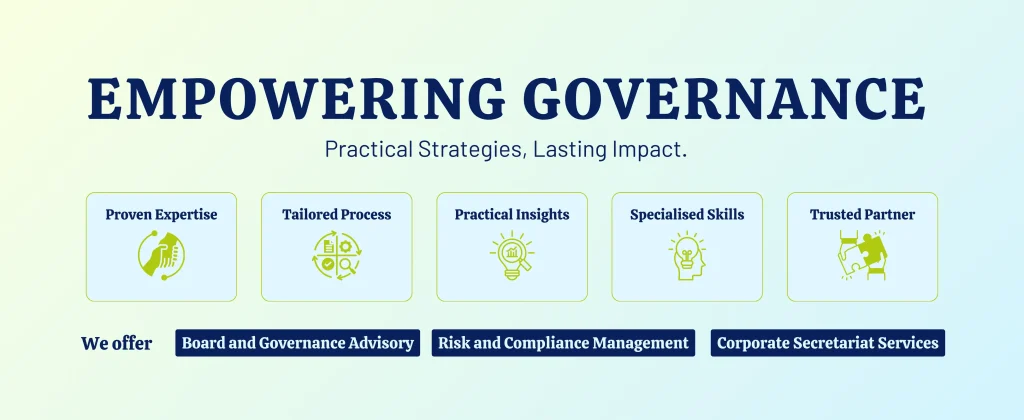
At Thrive, we deliver tailored governance solutions to navigate today’s complexities. Our core services—Board and Governance Advisory, Risk and Compliance Management, and Corporate Secretariat Services—strengthen frameworks, manage risks, and streamline operations, empowering organisations to achieve strategic goals and build stakeholder trust.
Beyond our core governance services, Thrive partners with a diverse network of specialists to provide comprehensive support tailored to each project. By aligning the right expertise with your organisation’s needs, we ensure practical, strategic, and results-driven solutions.
Our extended capabilities include:
- Strategy & Growth – Business optimisation, capital management, innovation, and operational resilience.
- Leadership & Organisational Change – Cultural transformation, executive development, and change management.
- Financial Strategy & Performance – Financial oversight, resource optimisation, and operational efficiency.
- Legal & Regulatory Compliance – Corporate law, commercial contracts, and compliance frameworks.
- Cybersecurity & AI Governance – Data protection, cyber risk management, AI ethics, and technology strategy.
- Sales, Marketing & Stakeholder Engagement – Brand positioning, business development, and relationship management.
- Operations & Supply Chain Efficiency – Process optimisation, resource management, and end-to-end operational effectiveness.
By integrating governance with these key disciplines, we help organisations navigate complexity, manage risk, and position themselves for long-term success.
Let’s start the conversation. Contact us today to discuss how we can support your organisation’s governance and growth journey!
Free Resources
Looking to strengthen your data governance strategy? Download our free resource, Data Governance for All Businesses: A Strategic Framework for Safeguarding Trust, Compliance, and Growth. This practical framework equips you with the tools to ensure compliance, mitigate risks, and drive sustainable growth. Build a resilient governance structure that adapts to evolving challenges while fostering trust with stakeholders.
Explore our library of free resources, including articles, templates, and tools, to support your business growth journey. Dive into educational content focused on key business areas such as strategy, finance, leadership, and more. Unlock the tools you need to thrive in today’s dynamic business environment.