Introduction
‘Are you stuck in a business partnership that’s more of a nightmare than a dream?’
‘Are you tired of feeling like your business partner is taking advantage of you?’
‘Do you worry about what would happen if your partner suddenly decided to leave?’
Maybe the fear of losing control over your company keeps you awake at night. Or perhaps you’ve wished for an easy way out of a toxic business partnership. If any of these scenarios sound familiar, you’re not alone.
Many entrepreneurs find themselves grappling with these very issues. Around 70% of business partnerships are estimated to eventually fail or experience significant conflict that leads to a breakup. This figure highlights the challenges inherent in maintaining a successful business partnership over the long term and the critical need for strategies to prevent and resolve partnership disputes.
The Power of Written Agreements
Meaning of ‘partnership’ in this article.
In the context of this article, a ‘partnership’ is when two or more individuals, such as founders, shareholders, or partners, come together to run a business. This includes joint ownership, shared responsibilities, and division of profits and losses.
One of the foundational pillars of a successful partnership is having a clear, written agreement in place. These agreements are not just formalities but essential tools for setting expectations, defining responsibilities, and establishing protocols for handling conflicts. They also significantly reduce the likelihood of disputes and their associated costs.
Partnership disputes encompass a wide range of conflicts that can arise between individuals involved in a business relationship. This includes shareholder disputes, founder disputes, or any disagreements between business partners. These disputes can stem from differences in vision, financial disagreements, breaches of responsibilities, or interpersonal conflicts.
The benefits of written agreements include:
- Clarity on Roles and Responsibilities: A well-drafted agreement prevents ambiguity about each partner’s role and responsibilities, reducing the potential for misunderstandings and disputes.
- Financial Arrangements: Documenting each partner’s contributions and profit-sharing ratios can prevent conflicts over financial matters. This transparency is crucial for maintaining trust and ensuring fairness.
- Dispute Resolution: Incorporating mechanisms for conflict resolution, such as mediation or arbitration, provides a structured approach to managing disagreements, thereby avoiding escalation.
- Exit Strategies: Defining procedures for how a partner can exit the business ensures smooth transitions and minimises disputes over departure terms.
- Decision-Making Processes: Outlining voting rights and decision-making protocols ensures that all partners are on the same page regarding how decisions are made, reducing the likelihood of conflict.
Business partners, founders, and shareholders must invest in drafting comprehensive written agreements. Investing in these agreements upfront protects the business and preserves personal relationships and peace of mind.
Further, businesses without formal agreements are more vulnerable to legal challenges, both from within (disputing partners) and external entities (clients, investors, regulators).
The Shocking Reality: The Majority of Business Partnerships Lack Written Agreements
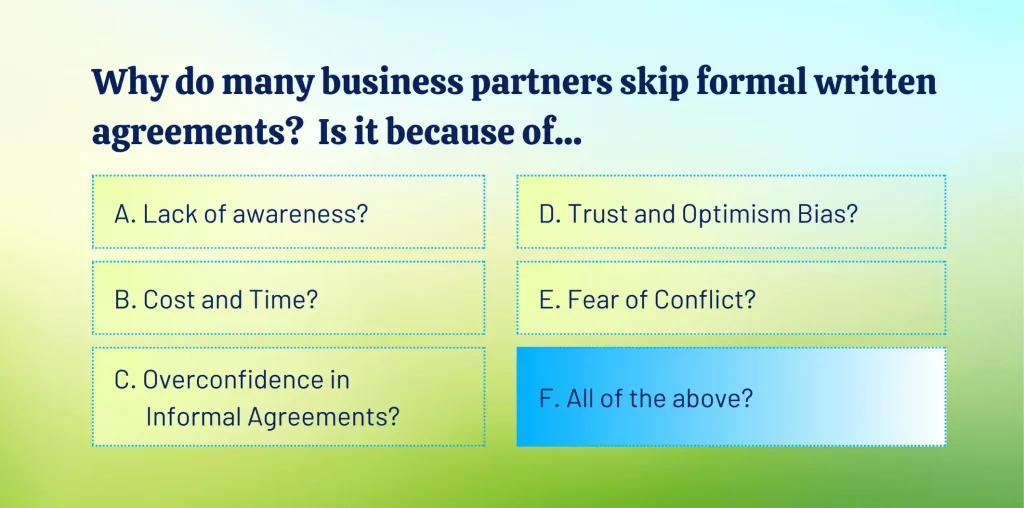
Research highlights the prevalence of this issue. According to the Harvard Business Review, up to 70% of business partnerships and startups lack comprehensive written agreements, leading to frequent disputes. Reports from other business organisations and government agencies also indicate that many small businesses operate without formal agreements, resulting in higher incidences of conflicts and legal challenges.
The reason many business partners do not formalise their arrangements in written agreements can be attributed to several factors:
1. Lack of Awareness: Some entrepreneurs may not be fully aware of the importance of legal agreements. They might not understand the potential risks of not having a formalised arrangement or may simply overlook the necessity due to a lack of legal knowledge.
2. Trust and Optimism Bias: Many business relationships begin with a high level of trust and optimism. Founders often believe their mutual understanding and goodwill will be sufficient to navigate future disagreements. This optimism bias can lead to an underestimation of potential conflicts.
3. Overconfidence in Informal Agreements: Verbal agreements and informal understandings are often relied upon in the early stages of a business. There can be an overconfidence that these informal agreements will suffice and be honoured by all parties involved.
4. Fear of Conflict: Discussing and drafting a written agreement often requires addressing potential disputes and worst-case scenarios. Some partners may avoid these discussions out of fear that they might create conflict or distrust early in the relationship.
5. Cost and Time: Drafting comprehensive agreements can be perceived as costly and time-consuming. Startups and small businesses, in particular, might prioritise immediate operational expenses over legal costs, considering formal agreements as non-essential at the early stages.
However, these initial hurdles are far outweighed by the potential long-term benefits of having clear, legally binding agreements. So, to get these agreements in place, it’s essential to tackle the tough, uncomfortable conversations early.
“Avoiding a tough conversation is the most expensive mistake you can make.”
Nilofer Merchant
The Importance of Early, Tough Conversations
While it may be tempting to avoid formal written agreements, there are compelling reasons to engage in difficult conversations about conflicts, exits, and worst-case scenarios at the outset of a business partnership. Proactively addressing these issues and documenting them in a written agreement while the relationship is still positive can yield significant advantages and prevent potential disputes.
1. Clarity and Alignment of Expectations
Early discussions about roles, responsibilities, and expectations ensure that all partners are on the same page from the beginning. This alignment helps prevent misunderstandings and assumptions that could lead to conflicts later. Clearly defining each partner’s contributions and expectations establishes the foundation for a harmonious working relationship.
2. Building Trust and Transparency
Addressing potential conflicts and worst-case scenarios early in the business relationship demonstrates a commitment to transparency and open communication. These discussions can build trust among partners, as they know everyone is willing to discuss and plan for difficult situations. Trust is critical to any successful partnership, and early transparency helps reinforce it.
3. Avoiding Emotional Decision-Making
When conflicts or exits are unplanned, decisions made in the heat of the moment can be emotionally charged and potentially damaging. Discussing these scenarios early in the relationship allows partners to agree on rational, well-thought-out processes and solutions without the pressure and emotions of an ongoing dispute.
4. Preventing Power Imbalances
Formal agreements can prevent situations where one partner feels taken advantage of or where power imbalances develop. By clearly defining decision-making processes, voting rights, and dispute resolution mechanisms, all partners are assured fair treatment and an equal say in the business.
5. Protecting Business Continuity
Having plans in place for conflicts and exits ensures that the business can continue operating smoothly even when unexpected events occur. This continuity is crucial for maintaining client trust, employee morale, and overall business stability.
6. Legal and Financial Safeguards
Written agreements provide legal protection and clarity. In the event of a dispute, a formal document outlining agreed-upon terms can simplify legal proceedings and provide clear evidence of the partners’ original intentions, saving significant legal costs and time.
7. Enhancing Business Reputation
A business that operates with clear, documented agreements can appear more professional and reliable to investors, clients, and other stakeholders. It shows that the business is well-managed and prepared for the future, which can enhance its reputation and attractiveness.
8. Facilitating Growth and Scalability
As the business grows, having clear agreements and processes in place makes it easier to attract new partners, investors, or employees. A solid framework guiding roles, responsibilities, and conflict resolution enhances the business’s scalability.
9. Smooth Transition During Exist
Addressing potential conflicts and worst-case scenarios early in the relationship helps maintain a harmonious working relationship and sets a clear framework for business exits. Discussing the exit process, including valuation and exit strategies, ensures all partners are aligned, protecting the business’s value and facilitating a smoother transition.
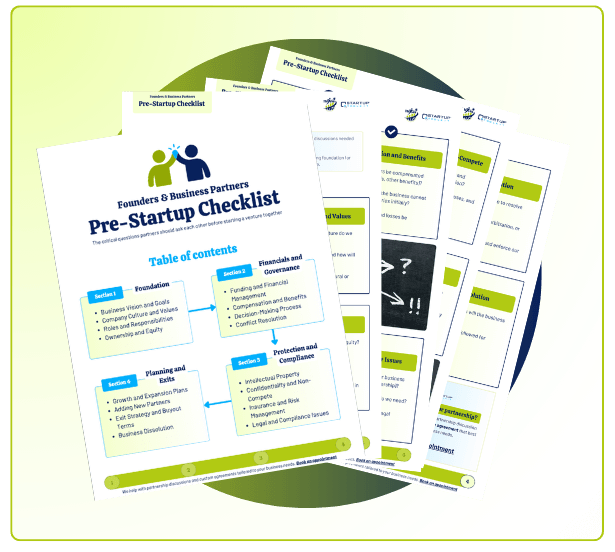
We help with partnership discussions and custom agreements tailored to your business needs.
Conclusion
While everyone is on good terms, taking the time to address these issues early may seem daunting. However, the benefits far outweigh the initial discomfort. Ensuring clarity, trust, fairness, and preparedness can protect your business and pave the way for long-term success.
In conclusion, while the reluctance to formalise business relationships with written agreements is understandable, the risks and potential costs of not having such agreements far outweigh the initial investment. By taking proactive steps to draft and implement comprehensive agreements, business partners can protect their interests, foster a harmonious working relationship, and ensure the long-term success of their ventures.
Part two coming soon!
STAY TUNED
Stay tuned for Part 2, where we’ll delve into further strategies to prevent partnership disputes and provide access to a special offer to help you craft rock-solid agreements and establish effective governance structures with your business partner.
Explore Thrive’s Other Resources and Offerings
Book Your Free Discovery Call
Ready to take the next step toward transforming your business? Schedule a free discovery call with us today. Our experienced team will discuss your business goals and challenges and provide personalised guidance on how to implement strategies from our Thrive Advantage framework.
Work with Thrive
Explore how Thrive can help you achieve sustainable growth, operational excellence, and business freedom. Our tailored services, based on the Thrive Advantage framework, are designed to guide your business journey with clarity and purpose.
Free Resources
Access our library of free resources, including articles, templates, and tools, to support your business growth journey. Dive into educational content focused on key business areas such as strategy, finance, leadership, and more. Unlock the tools you need to thrive in today’s dynamic business environment.