
Introduction
Partnership disputes, whether involving shareholders, founders, or any disagreements between business partners or owners, can pose a serious threat to a company’s stability, growth, and overall success. Whether it’s due to disagreements over company direction, financial management, or individual roles, these conflicts can create significant challenges. Effectively managing and resolving these disputes is crucial for maintaining a healthy business environment.
Before diving into the strategies for resolving and preventing partnership disputes, it’s important to understand the significant impact these conflicts can have on a business.
The Hidden Costs of Partnership Disputes
Disputes between partners can lead to:
1. Operational Disruptions
Ongoing conflicts can derail day-to-day operations, causing delays, inefficiencies, and a decline in productivity. Time and resources spent managing disputes can also divert focus from core business activities and strategic goals.
2. Damaged Relationships and Employee Morale
Persistent disputes can create a toxic work environment, affecting employee morale and job satisfaction. This can lead to decreased engagement and increased turnover, necessitating costly recruitment and training efforts. Additionally, the impact on clients can be significant, as dissatisfaction with service or product quality may result in lost business and damaged client relationships.
3. Reputational Damage
Internal conflicts can tarnish a company’s reputation, making it more difficult to attract clients, investors, and top talent. This damage can also invite closer scrutiny from regulators or legal challenges.
4. Loss of Competitive Advantage
Disputes can slow decision-making processes and stifle innovation, allowing competitors to gain an edge in the market.
5. Financial Losses
Legal fees, potential settlements, and lost opportunities can quickly deplete the company’s financial resources. This includes increased recruitment and training costs due to higher employee turnover resulting from a toxic work environment.
Given these significant risks, it’s clear that proactive measures are necessary to manage and prevent disputes effectively.

Proactive Measures to Prevent Partnership Disputes
Proactively managing and preventing partnership disputes is crucial for maintaining a healthy business environment. Here’s how companies can navigate these minefields and implement strategies to prevent conflicts from arising in the first place.
1. Establish Clear Governance Structures
A well-defined governance structure is crucial for a harmonious business partnership. It provides clarity on roles, responsibilities, and decision-making processes, which helps minimise misunderstandings. While a deeper exploration of effective governance structures will be covered in our next blog, it’s important to start with a comprehensive agreement that provides clarity on the following:
- Decision-Making Authority: Specify who has the power to make decisions and how these decisions will be made.
- Conflict Resolution: Include procedures for addressing conflicts, such as mediation or arbitration, to resolve issues before they escalate.
- Deadlock Resolution: Establish processes for handling situations where partners are evenly divided on an issue.
By ensuring that all partners understand and agree to these terms, you can minimise misunderstandings and conflicts.
2. Promote Transparent Communication
Regular and open communication is key to preventing disputes. Partners should be kept informed about the business’s performance, strategic decisions, and any changes that might impact their interests. Transparency fosters trust and reduces the likelihood of disagreements. Consider establishing regular meetings or updates to keep all parties aligned and address concerns proactively.
3. Encourage a Collaborative Culture
Creating a culture of collaboration rather than competition can significantly reduce the chances of disputes. Encourage partners to work together towards common goals and support one another in achieving the business’s vision. By focusing on shared objectives and mutual benefits, the potential for conflict decreases.
4. Regularly Review and Update Agreements
As the business evolves, so too should the governance structures and agreements. Regularly reviewing and updating agreements and policies ensures that they remain relevant and effective in addressing current issues. Adaptations may be necessary to reflect changes in the business’s structure, market conditions, or partner dynamics.
5. Foster Strong Relationships and Trust
Building strong relationships among partners can help prevent disputes. Encourage networking and relationship-building activities that promote trust and understanding. When partners have a good rapport, they are more likely to approach disagreements with a problem-solving mindset rather than a confrontational one.
When Disputes Arise: Mitigating the Damage
Even with the best preventive measures in place, disputes can still arise. When they do, having a robust dispute resolution mechanism outlined in your agreements is critical, such as mediation or arbitration, to address the issues efficiently. These methods can help you reach a resolution without resorting to lengthy and costly litigation.

Here are some effective strategies for resolving partnership disputes:
- Negotiation: Direct negotiation between the disputing partners can be an effective way to resolve conflicts. This approach works best when the parties are willing to communicate openly and are committed to finding a resolution.
- Mediation: Mediation involves a neutral third party who helps the disputing partners reach a mutually acceptable solution. Unlike arbitration or litigation, mediation is non-binding, which means the mediator does not impose a decision. Instead, the mediator facilitates communication and negotiation, helping the parties find common ground. Mediation can be a cost-effective and time-efficient way to resolve disputes while preserving business relationships.
- Arbitration: Arbitration is a more formal process than mediation, involving a neutral arbitrator who listens to both parties and makes a binding decision. This method is often faster and less expensive than litigation, and the arbitrator’s decision is typically final and enforceable in court. Including an arbitration clause in the partnership agreement can provide a clear path for resolving disputes without going to court.

As a Last Resort
When other dispute resolution methods prove ineffective, litigation may be the ultimate course of action, requiring the matter to be brought to court. Despite being costly and time-consuming, litigation might be the only viable option once all other avenues have been explored.
Recognising the significant personal and financial impact of disputes is crucial. Disputes can affect emotional well-being, lead to significant legal expenses, and consume valuable time. American writer Ambrose Bierce once described litigation as “a machine which you go into as a pig and come out of as a sausage”, highlighting how litigation can be a harsh and exhausting process, often leaving individuals feeling significantly altered and diminished. Therefore, it is essential to understand the profound implications of taking legal action before embarking on this challenging path.
Get expert advice
The Role of Lawyers and Expert Advice
When it comes to legal matters and corporate governance, tapping into the knowledge and expertise of legal professionals and governance experts can make the world of difference. They can help create solid agreements, navigate tricky legal situations, and offer guidance on handling disputes. Their expertise is essential in making sure that the company is legally compliant and that its best interests are always safeguarded.
Here’s how the right experts can help take your business to the next level:
- Crafting Rock-Solid Agreements: Legal experts can help create comprehensive agreements that anticipate and address potential areas of disagreement, reducing the likelihood of disputes arising.
- Guiding Effective Governance Structures: Experts can offer valuable advice on establishing effective governance structures that prioritise transparency and accountability within the organisation.
- Resolving Disputes: Lawyers can step in to represent the company in mediation, arbitration, or litigation, ensuring that any disputes are resolved in a way that aligns with the best interests of the business.

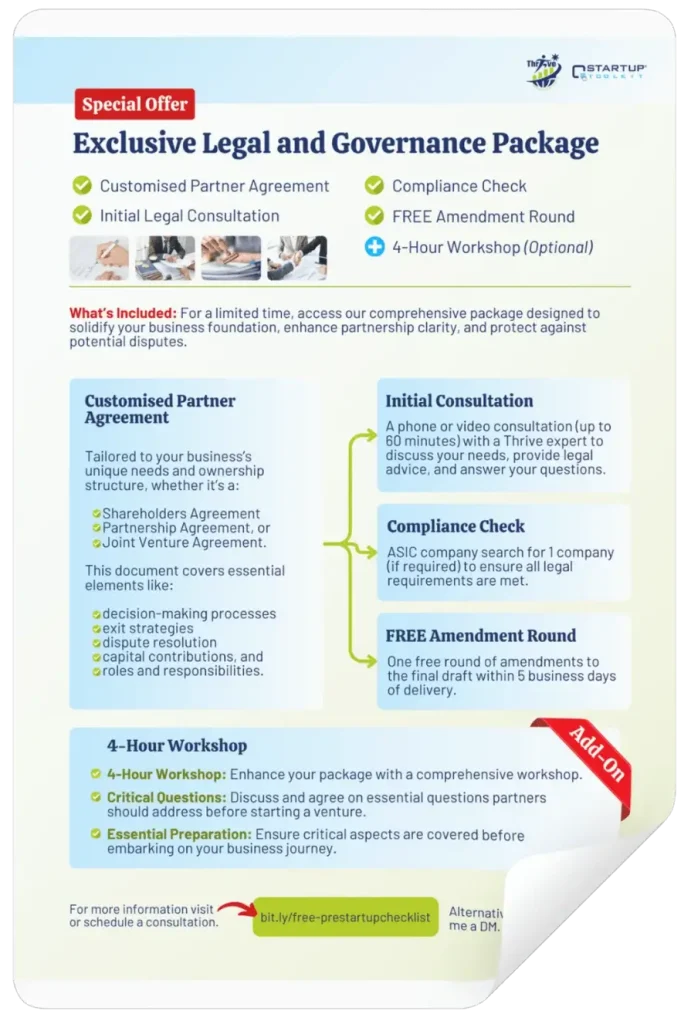
🔐 Secure Your Business’s Future with Our Exclusive Legal and Governance Package! 🔐
Act Now! Don’t miss this opportunity to safeguard your business with expert legal and governance support. Contact us today to secure this special offer and strengthen your business’s governance framework!
Real-World Examples of Partnership Disputes
To understand the importance of these strategies, let’s look at a couple of real-world examples:

The Apple Case
One of the most well-known shareholder disputes involved Apple Inc. In the mid-1980s, co-founder Steve Jobs clashed with then-CEO John Sculley over the direction of the company. The disagreement escalated to the point where Jobs was ousted from Apple. This high-profile conflict had significant repercussions, both for the company and for the individuals involved. It wasn’t until Jobs returned in the late 1990s that Apple regained its footing and became the tech giant it is today.
The Facebook Case
Another notable example is the dispute between Facebook co-founders Mark Zuckerberg and Eduardo Saverin. Saverin initially provided the seed funding for the company, but as Facebook grew, conflicts arose over the company’s direction and Saverin’s role. The dispute ended in litigation, with Saverin eventually receiving a settlement and his name restored to the list of co-founders. This case highlights the importance of clear agreements and the potential for disputes to arise even in highly successful companies.
Conclusion
Navigating the minefield of partnership disputes requires a proactive approach to governance, communication, and relationship-building. By establishing clear structures, fostering transparency, and promoting collaboration, businesses can significantly reduce the likelihood of conflicts. However, when disputes do arise, having effective resolution mechanisms in place ensures that they are managed efficiently, minimising disruption and preserving the health of the business.
Don’t let fear and uncertainty dictate your business’s future. Take proactive steps today to protect your company and create a harmonious partnership. Remember, the sooner you act, the sooner you can secure your company’s future and focus on what truly matters—growing your business and achieving your vision.
Review Part 1 of Navigating the Minefield: Strategies for Resolving Partnership Disputes and Preventing Them from the Start

🔐 Secure Your Business’s Future with Our Exclusive Legal and Governance Package! 🔐
Act Now! Don’t miss this opportunity to safeguard your business with expert legal and governance support.
Explore Thrive’s Other Resources and Offerings
Book Your Free Discovery Call
Ready to take the next step toward transforming your business? Schedule a free discovery call with us today. Our experienced team will discuss your business goals and challenges and provide personalised guidance on how to implement strategies from our Thrive Advantage framework.
Work with Thrive
Explore how Thrive can help you achieve sustainable growth, operational excellence, and business freedom. Our tailored services, based on the Thrive Advantage framework, are designed to guide your business journey with clarity and purpose.
Free Resources
Access our library of free resources, including articles, templates, and tools, to support your business growth journey. Dive into educational content focused on key business areas such as strategy, finance, leadership, and more. Unlock the tools you need to thrive in today’s dynamic business environment.