

As a business owner, you’ve probably encountered the frustrating phrases “That’s not my job!” or “That’s not in my job description!” more times than you care to remember. These phrases are a red flag that signals a deeper problem lurking within your organisation—role confusion.
This pervasive issue can derail your business objectives, undermine employee morale, and stymie growth. However, understanding the importance of role clarity and taking steps to address it can transform your business operations from chaotic to streamlined and efficient, opening up new possibilities for growth and inspiring hope for the future of your business.
The Hidden Costs of Role Confusion
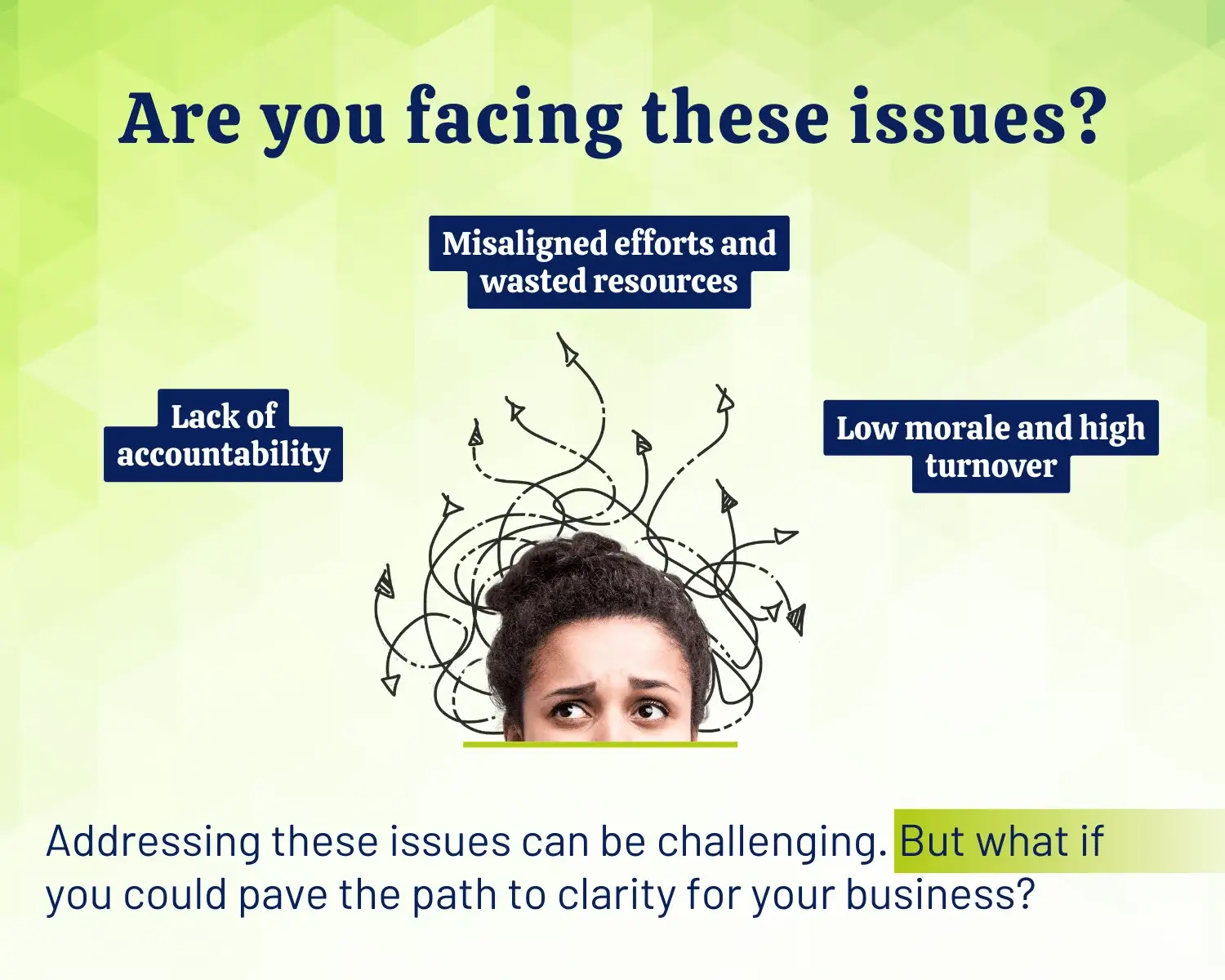
1 Misaligned Efforts and Wasted Resources
When employees aren’t clear about their roles and responsibilities, their efforts can become misaligned with the broader business objectives. This misalignment often leads to duplicated work, missed opportunities, and wasted resources. Instead of pulling together towards common goals, your team may work at cross-purposes, creating inefficiencies that hurt your bottom line.

Consider a scenario where two employees work on separate solutions to the same problem because neither knows who is responsible. Not only does this waste valuable time and resources, but it also means that the final output could be more suboptimal due to a lack of collaboration. Conversely, critical tasks could be left unattended because everyone assumed it was someone else’s responsibility.
2 Low Morale and High Turnover
Role confusion doesn’t just impact productivity—it also takes a heavy toll on employee morale. When team members are unsure of their responsibilities or feel their contributions are not valued, frustration and disengagement follow. This environment breeds resentment, lowers job satisfaction, and increases turnover rates. High turnover not only disrupts your operations but also incurs significant costs in recruiting and training new employees.
When employees are constantly second-guessing their roles, it creates a stressful work environment. The resulting lack of confidence and job satisfaction can lead to burnout, decreased productivity, and ultimately, a decision to leave the organisation. High turnover rates disrupt team cohesion and continuity, and the costs associated with recruiting, hiring, and training new employees can be substantial.
3 Lack of Accountability
Without clear roles and responsibilities, holding employees accountable becomes a Herculean task. Ambiguity allows individuals to deflect blame and shirk responsibilities, leading to a culture of finger-pointing rather than problem-solving. This lack of accountability undermines trust within teams and hinders the company’s ability to execute its strategy effectively.
In an environment where no one is held accountable, mistakes and inefficiencies are more likely to increase. Projects may fall through the cracks, deadlines may be missed, and the overall quality of work may suffer. A lack of accountability can also lead to a toxic work culture, where employees focus more on avoiding blame than achieving success.
The Path to Clarity and Alignment
1 Aligning Roles with Business Objectives
The first step in overcoming role confusion is ensuring each employee’s role aligns with your business’s strategic objectives. Clearly defined roles help employees understand how their work contributes to the company’s goals, instilling a sense of purpose and direction. When everyone knows their place in the larger picture, efforts become coordinated, driving the organisation forward cohesively.
To achieve this, start by mapping out your company’s strategic goals and then identify the key functions and tasks needed to achieve those goals. From there, define specific roles and responsibilities that align with these functions. This process should involve input from various stakeholders to ensure that roles are comprehensive and realistic.

For example, in a marketing department, roles might include content creation, social media management, and analytics. Each of these roles should be clearly defined in terms of responsibilities, expected outcomes, and how they contribute to the overall marketing strategy.
2 Setting Clear Performance Expectations
Clear performance expectations must complement clear roles. Employees need to know not just what they should be doing but also the standards and timelines they must meet. Well-defined performance expectations enhance productivity and job satisfaction. Employees can prioritise tasks effectively, and managers can provide targeted feedback and support.
Performance expectations should be specific, measurable, achievable, relevant, and time-bound (SMART). For instance, instead of a vague expectation like “improve social media presence,” a clear expectation would be “increase social media engagement by 15% over the next quarter through targeted content and active community management.”
Regular performance reviews and feedback sessions are also crucial. These sessions provide an opportunity to discuss progress, address issues, and adjust goals as necessary. They also help employees feel supported and recognised for their efforts, boosting morale and motivation.
3 Driving Accountability
With clear roles and expectations in place, accountability naturally follows. Employees who understand their responsibilities are more likely to take ownership of their work. This ownership fosters a culture of accountability, where individuals are committed to delivering results and contributing to the company’s success. A high-performance culture emerges, characterised by proactive problem-solving and continuous improvement.
To further drive accountability, establish regular check-ins and progress reports. These check-ins should focus on successes and improvement areas, fostering a growth mindset within the team. Additionally, implementing accountability tools such as project management software can help track tasks and ensure everyone stays on course.
Accountability should also be recognised and rewarded. When employees consistently meet or exceed expectations, acknowledging their efforts through incentives, bonuses, or public recognition can reinforce positive behaviour and motivate others to follow suit.
4 Encouraging Solution-Oriented Thinking
President Obama once said, “Learn how to get stuff done.” This advice is invaluable in a business context, where employees must go beyond merely identifying problems. They should be empowered and encouraged to propose solutions as well. When team members are supported to think proactively and take initiative, it enhances their value and boosts the organisation’s overall problem-solving capacity and productivity. This proactive mindset is essential for driving continuous improvement and achieving long-term success.
In today’s dynamic workplace, employees must contribute by offering solutions, not just pointing out issues. Shifting focus from problem-spotting to problem-solving can significantly elevate productivity and spur innovation. Foster a culture of solution-oriented thinking among your team by equipping them with the necessary tools, training, and a supportive environment that encourages creativity and initiative. This approach empowers individuals and propels the organisation towards its goals more efficiently and effectively.
Structuring the Organisation for Success
1 Design Roles to Support Strategy
To embed role clarity, structure your organisation to support your strategic goals. Define roles and responsibilities at every level, ensuring they align with the company’s objectives. An effective organisational structure promotes collaboration and coordination among departments, ensuring everyone works towards the same targets.
Organisational design should consider the flow of information and decision-making processes. Clear hierarchies and reporting lines help avoid confusion and ensure employees know who to turn to for guidance or support. Additionally, cross-functional teams can be established to tackle specific projects, promoting collaboration and innovation.
For example, a company focused on rapid product development might adopt an agile structure with small, cross-functional teams responsible for different aspects of the product lifecycle. This structure allows for quick decision-making and adaptability, which is critical for staying competitive in fast-paced markets.
2 Communicate the Strategy Clearly
Communication is crucial to maintaining role clarity. Regular updates and transparent communication from leadership keep employees informed about the company’s strategy and any changes that may affect their roles. This ongoing dialogue helps eliminate confusion, fosters engagement and ensures everyone is aligned with the company’s vision and mission.
Effective communication involves more than just top-down announcements. It should be a two-way street, with opportunities for employees to ask questions, provide feedback, and share ideas. Town hall meetings, regular team huddles or newsletters, interactive platforms, and an open-door policy can all contribute to and facilitate a culture of open communication.
In addition to verbal communication, written documentation such as an employee handbook or intranet resources can provide a reference point for roles, responsibilities, and company policies. Ensuring this information is easily accessible and regularly updated can help prevent misunderstandings and ensure consistency.
Further, when new strategies or changes are introduced, it’s essential to communicate the reasons behind them and how they impact each role. This context helps employees understand the bigger picture and see how their contributions make a difference. Clear communication also helps build trust and transparency within the organisation.
Conclusion
Role clarity is not a one-time initiative but an ongoing effort that requires consistent attention and refinement. By aligning roles with business objectives, setting clear performance expectations, and driving accountability, you can eliminate the chaos of role confusion. Encourage a solution-oriented mindset and structure your organisation to support your strategic goals.
With these steps, you can transform your workplace into a well-oiled machine where everyone knows their role, understands their contribution, and is motivated to drive the company towards success. The result is a more efficient, productive, and engaged workforce ready to tackle the challenges ahead.
Unlock Business Freedom: Download Our FREE Guide!
Are you ready to reduce chaos and reclaim your time without sacrificing family moments? Discover the secrets to achieving business freedom with our FREE guide. Learn how to streamline operations, avoid setbacks, and prioritise what matters most.
In this guide, you’ll uncover:
- 6 actionable strategies to streamline your business and reduce chaos.
- Tips to overcome trial-and-error approaches and decision-making bottlenecks.
- The key to balancing business growth with quality family time.
Get instant access to your guide by clicking on the link below. Start your journey to business freedom today!
👉 Download your FREE guide here
Explore Thrive’s Other Resources and Offerings
Book Your Free Discovery Call
Ready to take the next step toward transforming your business? Schedule a free discovery call with us today. Our experienced team will discuss your business goals and challenges and provide personalised guidance on how to implement strategies from our Thrive Governance & Growth Plan.
Work with Thrive
Explore how Thrive can help you achieve sustainable growth, operational excellence, and business freedom. Our tailored services, based on the Thrive Governance & Growth Plan, are designed to guide your business journey with clarity and purpose.
Free Resources
Access our library of free resources, including articles, templates, and tools, to support your business growth journey. Dive into educational content focused on key business areas such as strategy, finance, leadership, and more. Unlock the tools you need to thrive in today’s dynamic business environment.